How to Maximise Space In Your Child's Bedroom
In the average British home, children's bedrooms are often the smallest rooms, yet they are required to carry the most weight, serving as a sleep sanctuary, a playroom, and a quiet study zone all at once.
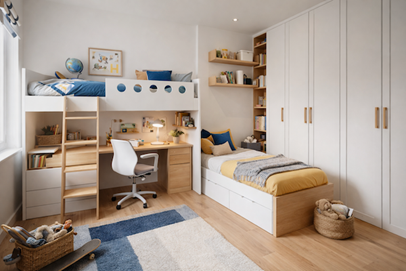
By thinking vertically and choosing furniture that works overtime, you can transform even the most compact box room into a functional, airy retreat.
Smart Storage Solutions for Everyday Essentials
The key to a spacious room is keeping the floor clear. Use adaptable storage options such as under-bed drawers and wall-mounted shelves to ensure everything has a designated home. Consider investing in high-quality fitted furniture from Hammonds Furniture for a truly seamless look that eliminates awkward gaps where dust accumulates.
Bespoke wardrobes can be tailored to the specific dimensions of your room, reaching right up to the ceiling to capture storage space that freestanding units simply miss. This approach keeps toys and school items organised, encouraging tidiness while freeing up valuable bedroom space for actual play.
Layout Ideas to Make the Most of Limited Space
When floor real estate is at a premium, you must experiment with furniture placement. Use corners and vertical height to your advantage; for instance, L-shaped layouts can tuck a bed and a desk into a single corner, leaving the centre of the room open. Position beds strategically to create open pathways and dedicated zones for playing, resting, and learning.
By pulling furniture away from the door and towards the perimeter, you create a natural flow that makes the room feel significantly larger than its square footage suggests.
Multi‑Functional Furniture That Works Harder
In a small bedroom, every piece of furniture must earn its keep. Choose versatile pieces, such as loft beds, that elevate the sleeping area, creating space for a den or a desk underneath. Fold-out desks are another brilliant British space-saver, providing a sturdy surface for homework that can be tucked away when it's time for Lego.
Similarly, storage benches at the end of a bed offer a place to sit while doubling as a chest for extra bedding or seasonal clothes, helping you design a practical bedroom that adapts as your child grows.
Decorating Tips to Create a Spacious, Calm Environment
Don't hesitate to use visual tricks to enhance the sense of scale. Light colours (such as soft whites or muted pastels) reflect natural light, while simple patterns prevent the space from feeling busy.
Incorporate mirrors to bounce light into darker corners and use soft textiles like rugs and throws to maintain comfort without adding unnecessary clutter. By keeping the decor personalised but streamlined, you create an environment that feels calm, organised, and surprisingly roomy.